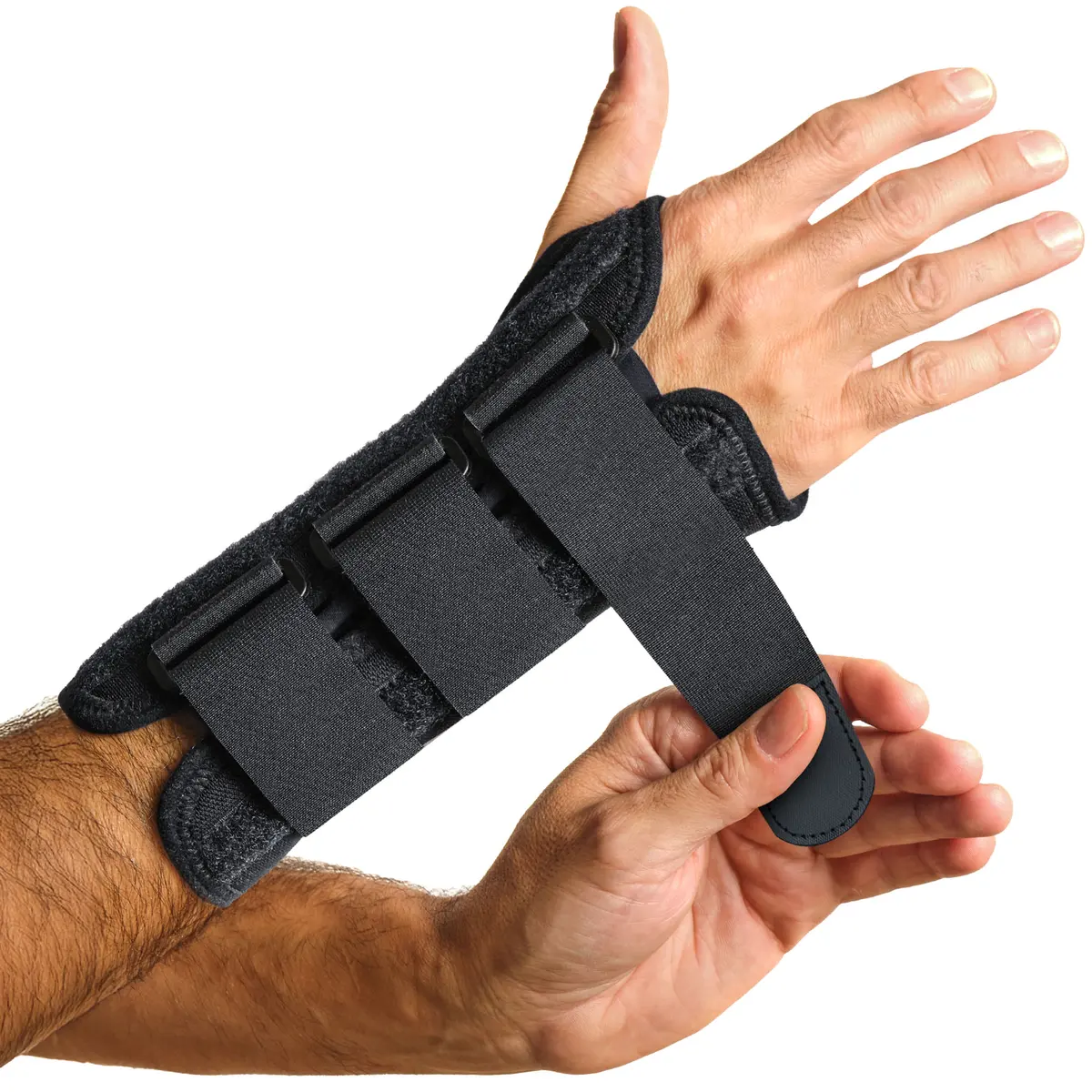
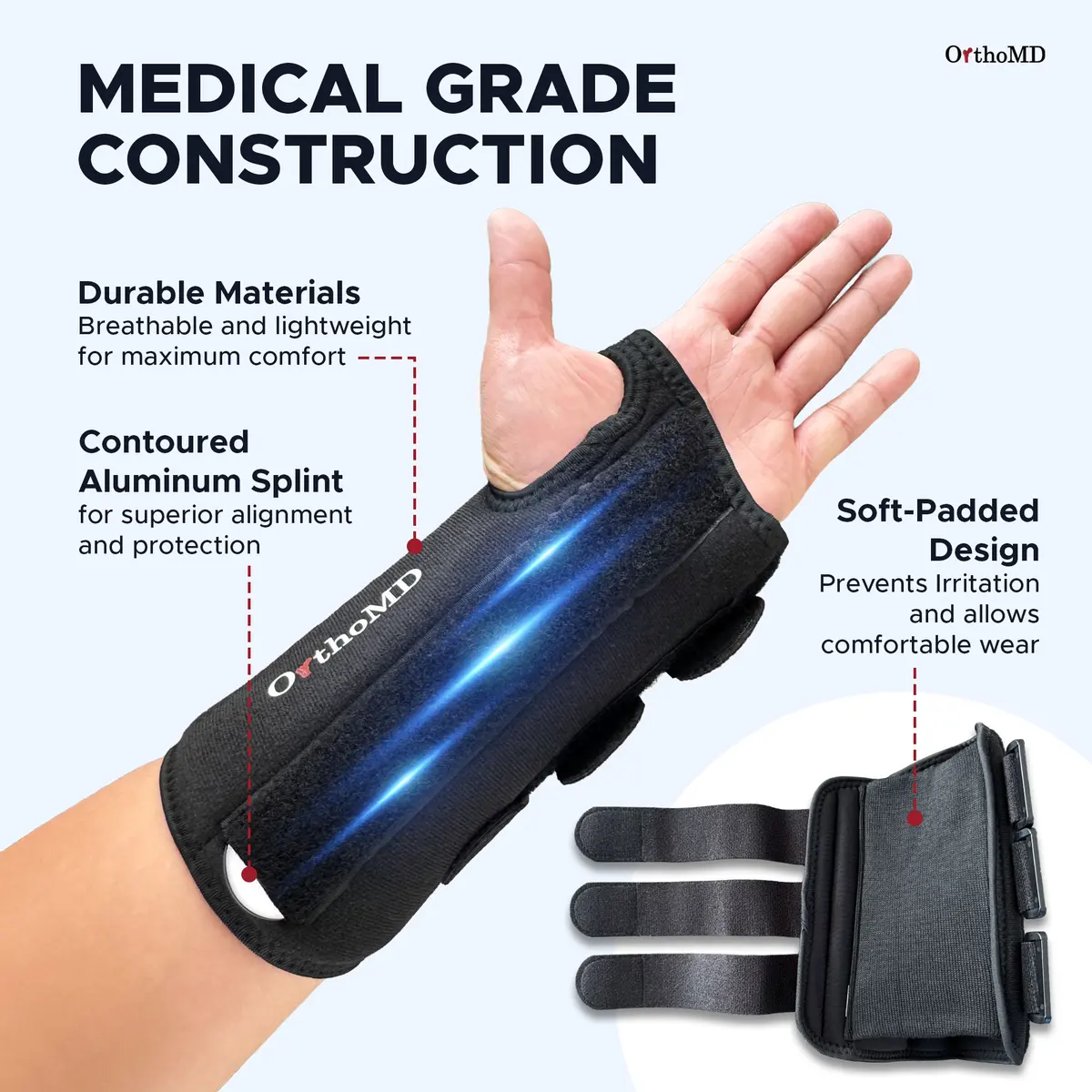
AAOS OrthoInfo lists wearing a splint while sleeping among the simple measures that can relieve early carpal tunnel symptoms, and says a brace worn at night keeps the wrist from bending while you sleep, with a neutral position reducing pressure on the nerve. The AAFP's 2024 review describes splinting as a first-line option for mild to moderate carpal tunnel syndrome because it is accessible, easy to use and carries minimal harm, and notes that night-only splinting is as effective as continuous wear.
The evidence is more modest than the advice sounds. An updated Cochrane review found low-certainty evidence that night splints may improve overall outcomes in the short term compared with no treatment, and not enough evidence to say one splint design or wearing schedule is better than another. The 2024 AAOS/ASSH clinical practice guideline does not make a separate recommendation for night splinting before surgery. It does report that a trial comparing corticosteroid injection with night splints found no significant difference at one to two years, and that injections do not give long-term improvement.
In practice, that means a night splint is a low-risk, low-cost trial of treatment, usually worth four to six weeks of consistent use, and not a cure. If it does not help, that is useful information too.